

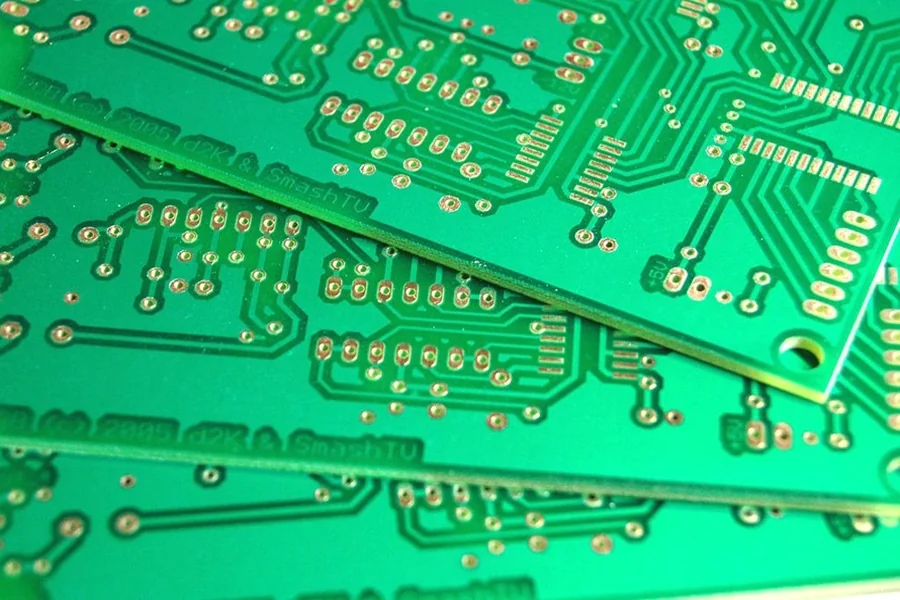
A 4 Layer PCB is a printed circuit board with four conductive layers, typically arranged as two signal layers sandwiched between two power/ground planes. This design allows for high-density circuits and better signal integrity, making it ideal for complex electronic applications. Compared to single-sided or double-sided boards, a 4 Layer PCB provides more routing options, improved electromagnetic compatibility, and efficient power distribution.
These boards are widely used in telecommunications, computing, medical devices, automotive electronics, and other applications where high performance, reliability, and compact design are essential.
Advantages of 4 Layer PCBs
The design of a 4 Layer PCB provides several advantages that make it a preferred choice for modern electronics:
- High-Density Circuitry: Supports complex designs with multiple components in a compact area.
- Improved Signal Integrity: Reduced noise and interference due to dedicated power and ground planes.
- Efficient Power Distribution: Helps maintain voltage stability and reduces voltage drops.
- Electromagnetic Compatibility (EMC): Better control of EMI through optimized layer stacking and trace layout.
- Thermal Management: Multiple layers allow better heat dissipation for high-power circuits.
These advantages make 4 Layer PCBs suitable for applications requiring precision, performance, and reliability.
Applications of 4 Layer PCBs
4 Layer PCBs are widely used in industries where advanced circuitry and high performance are required:
- Telecommunications: Routers, switches, and high-speed communication devices use 4 Layer PCBs to handle complex signal routing.
- Computing Devices: Servers, motherboards, and high-performance computers require multilayer boards to manage dense circuitry.
- Medical Electronics: Diagnostic equipment, imaging systems, and monitoring devices benefit from high-density 4 Layer PCBs.
- Automotive Electronics: Advanced driver-assistance systems (ADAS), infotainment, and electric vehicle control units rely on multilayer boards.
- Industrial Controls: Automation and control systems utilize 4 Layer PCBs for robust and reliable operations.
These applications demonstrate the versatility and importance of 4 Layer PCBs in high-tech electronic solutions.
Key Features of 4 Layer PCBs
A 4 Layer PCB is defined by several characteristics that enhance performance and reliability:
- Four Conductive Layers: Typically, two signal layers are separated by power and ground planes for improved signal integrity.
- Vias and Interconnections: Plated-through holes connect different layers, ensuring seamless electrical pathways.
- Compact Design: Supports high-density circuits without increasing board size.
- Versatility: Compatible with a wide range of materials, components, and surface-mount or through-hole technologies.
- Durability: Designed to withstand mechanical stress, heat, and operational demands.
These features make 4 Layer PCBs ideal for complex applications requiring reliable and efficient circuitry.
Challenges in 4 Layer PCB Design
While 4 Layer PCBs offer many advantages, there are design and manufacturing challenges to consider:
- Complex Routing: Requires precise planning to avoid trace interference and maintain signal integrity.
- Thermal Management: Heat dissipation must be carefully designed for high-power applications.
- Manufacturing Precision: Accurate drilling, plating, and alignment of layers are critical for functionality.
- Testing and Quality Control: Boards must be rigorously tested to ensure layer connectivity and performance reliability.
Overcoming these challenges requires experienced designers, advanced equipment, and quality manufacturing processes.
The Future of 4 Layer PCBs
As electronic devices continue to evolve, 4 Layer PCBs remain essential for high-performance applications. Emerging technologies such as 5G communications, IoT devices, AI-enabled electronics, and electric vehicles demand multilayer boards capable of handling dense circuits and high-speed signals.
Future trends include:
- Advanced Materials: Development of low-loss, high-frequency substrates for enhanced signal performance.
- High-Density Interconnects: Use of microvias and fine-pitch components for compact designs.
- Improved Thermal Solutions: Advanced heat dissipation techniques for power-intensive circuits.
- Automation and Precision Manufacturing: Ensuring faster production and consistent quality.
These advancements ensure that 4 Layer PCBs will continue to play a crucial role in modern electronics.
Conclusion
A 4 Layer PCB provides an effective solution for complex, high-density electronic applications. By offering improved signal integrity, efficient power distribution, and compact design, these boards meet the needs of industries ranging from telecommunications and computing to automotive and medical electronics.
Partnering with a reliable 4 Layer PCB Manufacturer ensures access to high-quality fabrication, precise design, and timely delivery. With the right manufacturer, businesses can develop advanced electronic products that meet performance requirements while maintaining efficiency and cost-effectiveness.
