

Workplace safety has always been a crucial aspect of organizational success, ensuring the well-being of employees while improving productivity. Over the years, safety standards have evolved significantly, driven by technological advancements, regulatory changes, and an increased emphasis on employee welfare. Today, organizations are investing heavily in cutting-edge solutions to create safer work environments. This article delves into the recent developments in workplace safety and explores the future trends shaping the industry.
The Changing Landscape of Workplace Safety
Traditionally, workplace safety relied on manual inspections, safety drills, and compliance with standard regulations. However, with rapid industrialization and technological progress, new safety hazards emerged, necessitating more sophisticated solutions. The integration of smart technologies, automation, and artificial intelligence (AI) has revolutionized workplace safety measures.
According to the report published by the International Labour Organization (ILO) in August 2024, approximately 2.78 million workers die each year due to occupational accidents or work-related diseases. Additionally, non-fatal work-related injuries cost businesses billions of dollars annually contributing to the loss of more than 4% of the Gross Domestic Product worldwide. These staggering numbers have prompted industries to adopt more robust safety protocols that cater to the workplace safety industry.
Recent Developments in Workplace Safety
1. Artificial Intelligence and Machine Learning in Risk Prediction
AI and machine learning are playing a pivotal role in identifying workplace hazards before they lead to accidents. Predictive analytics, powered by AI, can assess historical data and detect patterns that indicate potential risks. According to Goldman Sachs Research, investment in AI globally is projected to reach USD 200 billion by 2025. The growing investment in AI shows the increasing usage of AI in different sector as well as in AI-driven safety monitoring tools to analyse employee behaviour, machinery performance, and environmental conditions to prevent mishaps.
AI-powered cameras and sensors can detect when workers are not wearing personal protective equipment (PPE) and issue real-time alerts. For instance, in October 2024, Innodisk Corporation launched an innovative AI-based InnoPPE recognition solution to improve safety and compliance in high-risk industrial environments. This AI-driven solution ensures real-time detection of Personal Protective Equipment (PPE), including safety helmets and gloves, and seamlessly integrates with existing surveillance systems. The development of such AI-powered systems enables greater efficacy in workplace safety further strengthening safety standards among all the workers.
2. Wearable Technology for Employee Safety
Wearable devices have become a game-changer in ensuring workplace safety, especially in high-risk industries like construction, manufacturing, and mining. Smart helmets, vests, and gloves equipped with sensors monitor workers’ vital signs, detect hazardous gas levels, and track body posture to prevent injuries.
A notable example is exoskeletons, which are robotic wearable suits designed to reduce physical strain on workers. These devices assist in heavy lifting, significantly decreasing the risk of musculoskeletal disorders. Recently, Inter IKEA Systems B.V. in its commitment to enhance workplace safety deployed 400+ exoskeletons spanning 14 countries. The development showcases the companies continuous research and development in the domain of workplace safety for a healthier working environment.
3. Internet of Things (IoT) and Smart Safety Systems
The Internet of Things (IoT) has enabled organizations to create interconnected safety systems. IoT sensors installed in workplaces continuously collect data on air quality, temperature, noise levels, and equipment conditions and this real-time data helps organizations make proactive safety decisions. According to the report published by the 5G Americas in July 2024, global IoT subscriptions summed 3.3 billion in 2024 and this number is estimated to reach 5 billion by 2028 reflecting a change of 51.5% within a time span of 4 years. This rapid growth in IoT subscriptions highlights the increasing reliance on interconnected systems to enhance workplace safety and operational efficiency, underscoring the transformative potential of IoT technologies in fostering a safer and more responsive environment for organizations worldwide.
An example of smart safety system used in industries is smart fire detection systems integrated with IoT which can instantly alert authorities and employees about fire hazards, reducing response time. Furthermore, in the oil and gas industry, IoT sensors monitor pipeline integrity and detect leaks before they escalate into catastrophic events showcasing its high importance.
4. Robotics and Automation in Hazardous Tasks
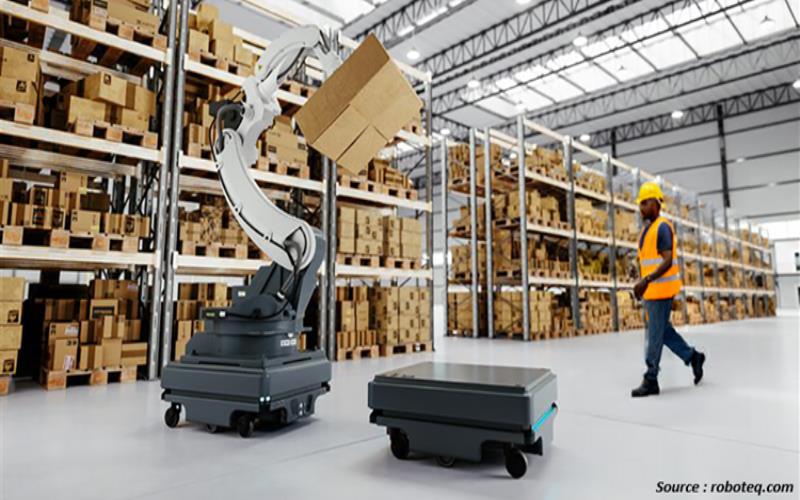
Automation is significantly reducing human exposure to dangerous tasks. Robots are now being used in manufacturing plants, warehouses, and construction sites to perform high-risk activities, such as welding, material handling, and chemical mixing. In environments where hazardous substances are handled, chemical spill kits remain essential for safety and rapid response An example of such automated robot is automated guided vehicles (AGVs) which are used to move materials and perform tasks in warehouses and manufacturing facilities. The AGVs are equipped with sensors as well as cameras and further it can detect and avoid obstacles, ensuring safe navigation through busy workspaces promoting workplace safety. For instance, in January 2024, Dematic deployed its end-to-end automation solution at an Australian meat processing facility featuring AGVs owing to the harsh environments within cold storage facilities. The development not only promoted workplace safety but also enhanced production efficiency.
5. Advanced Ergonomics for Workplace Well-being
Ergonomic advancements are helping reduce workplace injuries related to poor posture, repetitive motion, and strain. AI-powered ergonomic assessments use computer vision to analyse employees’ movements and suggest posture corrections. Additionally, smart office furniture, such as adjustable standing desks and AI-powered chairs, promotes better spinal health.
Future Developments in Workplace Safety
1. AI-Driven Mental Health Monitoring
Mental health is increasingly being recognized as a critical component of workplace safety. In the future, AI-based mental health monitoring tools will become more prevalent. These tools analyse speech patterns, facial expressions, and physiological data to detect signs of stress, anxiety, and burnout, allowing organizations to intervene early.
2. Blockchain for Safety Compliance and Transparency
Blockchain technology is expected to revolutionize workplace safety compliance by ensuring transparency in safety records. Organizations will use blockchain to store incident reports, safety audits, and training records, making them tamper-proof and easily accessible for regulatory compliance.
3. Climate-Responsive Safety Solutions
As climate change intensifies, workplaces will adopt climate-responsive safety technologies. AI-driven climate sensors will help companies prepare for extreme weather conditions, reducing risks related to heat stress, flooding, and natural disasters.
Conclusion
The landscape of workplace safety is evolving rapidly, driven by technological innovations and a heightened focus on employee well-being. AI, IoT, wearables, robotics, and VR are already transforming how organizations protect their workforce. Looking ahead, emerging trends like AI-driven mental health monitoring, blockchain for compliance, and biometric safety measures will further enhance workplace security.
Organizations must embrace these advancements to not only comply with safety regulations but also to foster a culture where employees feel valued and protected. By investing in cutting-edge safety solutions, businesses can reduce workplace injuries, improve productivity, and create a healthier, more secure working environment for all.
Biprajit Deb is a seasoned researcher who is passionate and committed. He is dedicated to providing customers with practical insights derived from in-depth study in order to assist them in navigating challenging business situations. With a keen interest in a number of fields, such as agriculture, energy and power, and ICT and media, Biprajit hopes to contribute insightful viewpoints in these fields. In addition to conducting research, Biprajit likes to express his ideas in articles and blogs and finds comfort in literature and the arts, frequently losing himself in a book or painting. You can get in touch with the author at info@nextmsc.com
